Guide 18 · All guides
What "BU" (brilliant uncirculated) means on a listing
On a silver listing, "BU" is short for brilliant uncirculated. It usually describes a coin or round struck the normal way, on standard production dies, that has never been passed around as money. No circulation wear, original mint surface.
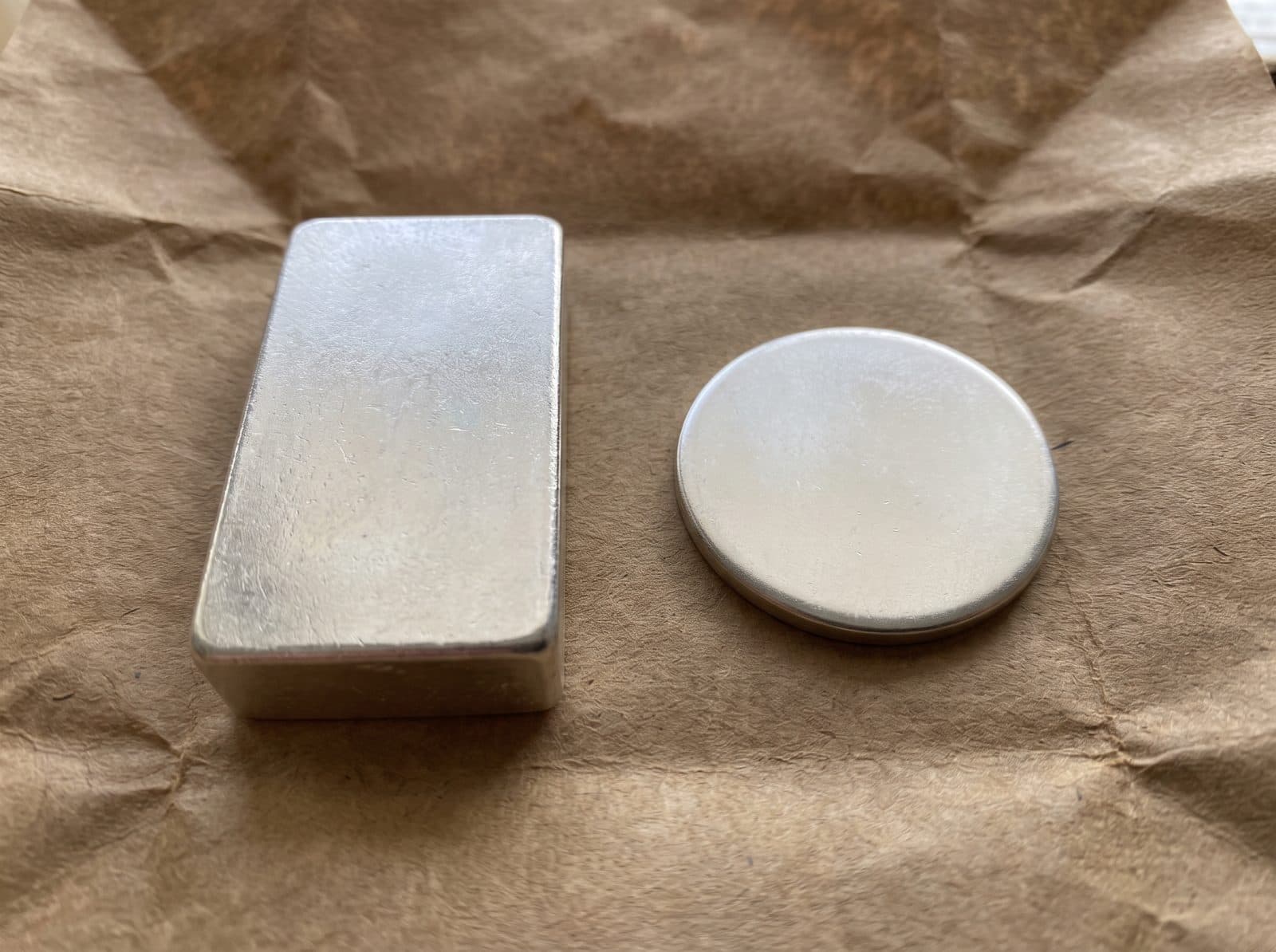
On a silver listing, "BU" is short for brilliant uncirculated. It usually describes a coin or round struck the normal way, on standard production dies, that has never been passed around as money. No circulation wear, original mint surface.
This page explains the label. For the general framing of these guides, see the educational disclaimer.
The short definition
- Brilliant: the coin still has its original mint luster, the way light rolls across a fresh strike.
- Uncirculated: it has not been used in commerce, so the high points of the design show no wear from hands, pockets or tills.
Many bullion coins are sold in this standard finish by default. A listing may say BU, "uncirculated", or nothing at all and mean the same everyday strike.
BU next to proof
Proof vs bullion covers the other side. In short:
- A proof is struck with specially prepared dies and planchets, often more than once, for a mirror field and frosted design. It is made as a collector piece.
- A BU coin is a regular production strike. It can be bright and clean, but it does not have the deliberate mirror and frost contrast of a proof.
Same design, different process. A listing that says BU is not describing a proof, and a proof is not "extra BU".
Figure. Two coin silhouettes side by side: left labelled "BU: standard strike, satin luster", right labelled "Proof: mirror field, frosted design". Teaching marks only. Not a product endorsement.
BU is not a grade
BU is a seller's description. It is not a numerical grade from a third-party grading service. A coin in a grading holder carries a numerical grade printed on the label; a coin sold as BU in a tube or flip usually does not.
Two coins both sold as BU can look different up close. The word tells you the coin was not circulated. It does not rank the quality of the strike or the surface.
What can still show on a BU coin
Uncirculated is not the same as flawless. Example marks a BU coin can still carry:
- Small contact marks from coins touching each other at the mint or in bulk packaging (often called bag marks).
- Milk spots or light haze on some silver coins.
- Toning over time, depending on storage.
- Fingerprints if someone handled it bare-handed.
None of these mean the coin circulated. They are why "BU" alone does not describe condition in detail.
Reading a listing that says BU
Example checklist when you see BU on a listing:
- Is it a coin, a round or a bar? BU wording shows up on all three.
- Does the listing also say proof, or show a mirror finish? If so, read it as proof, not BU.
- Is there a numerical grade from a grading service, or only the word BU?
- Is the photo of the actual piece, or a stock image of the design?
- Is the metal content stated on the item itself (fine weight and purity)?
For coins, rounds and bars side by side, see Stacking basics: coins, rounds, bars.
FAQ
Does BU mean the coin is perfect?
No. It means uncirculated with original luster. Contact marks, spots or toning can still be present.
Is BU the same as proof?
No. Proof is a special strike with a mirror field. BU is a regular production strike. See Proof vs bullion.
Is BU a grade?
No. It is a description. Numerical grades come from grading services and appear on a holder label.
Can rounds and bars be BU?
Sellers sometimes use the word for them too, to mean a fresh, unhandled piece. It still is not a grade.