Guide 12 · All guides
Proof finish vs bullion on a silver coin
Bullion is priced as metal. A proof finish is a minting process, and it usually sits in a different market than common bullion of the same design.
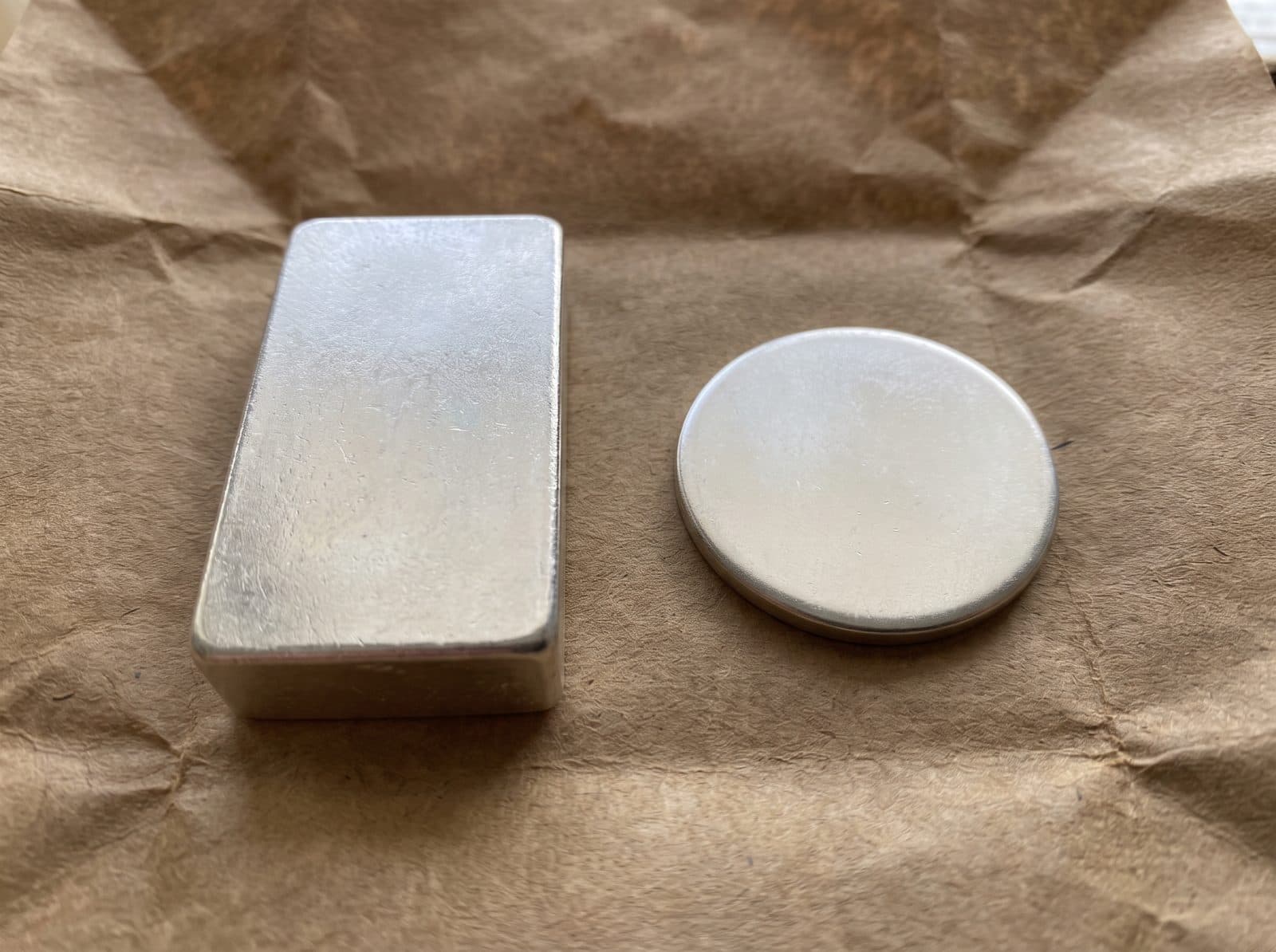
Bullion is priced as metal. A proof finish is a minting process — mirrored fields, frosted devices, careful strikes — and it usually sits in a different market than common bullion of the same design. Polish and packaging are not melt value.
This is a description of how the two are priced. It is not which to buy, not a grading lesson, and not a forecast.
Figure. Two outlines of the same coin: left labeled melt-plus-fabrication; right labeled finish-and-presentation. Not a live quote.
Bullion is the metal form
A modern bullion coin is struck by a national mint for people who want a stated ounce of fine silver in a recognizable form. The face value is legal status, not the market price. Typical issues are one troy ounce at .999 or .9999 fine. The product price is melt plus a premium for minting, brand, and a supply chain that moves ounces.
Dealers who bid common bullion all day know those coins. Recognizability is part of what you paid for on the way in. See Bullion vs numismatic and Silver premiums, explained.
Proof is a finish and a different market
Proof is not a magic upgrade of melt. It is a production method: polished dies, special handling, often a mirrored field and frosted relief. The same design that sells as a bullion ounce can also sell as a proof in a case with a certificate.
That proof is usually priced for condition, presentation, and a smaller mintage story — not as bulk metal. A dealer who bids tubes of bullion may not be the buyer for a graded or cased proof. That is a different conversation, not a defect in the silver.
This page does not invent a grade scale, a population report, or a “typical” proof premium. Live premiums move. Do not print a made-up percent here.
Packaging is not melt either
The capsule, the box, the COA, and the foam insert are packaging. They can matter to a collector buyer. They do not change how many troy ounces of silver are in the coin.
If a listing’s price only makes sense when you add the box and the story, you are looking at a finished object, not a melt ticket. That is allowed. It is a different invoice. See How to read a dealer invoice.
How to read the invoice without a verdict
Ask which market the seller is in:
- Same mint, same ounce, sold as common bullion → melt-plus-fabrication logic.
- Same design, sold as proof / graded / limited presentation → condition-and-scarcity logic.
If you cannot tell, slow down. Read the identity line, the mint, the year, and whether the price still makes sense as melt-plus-fabrication. If it only makes sense as a scarce finished object, you are in the collector market.
When you sell later, the bid that matters is the bid for that product, that day — not last night’s London fix. See Selling physical silver and Bid vs ask.
No live ticker. No dealer names. No recommendation to buy or sell.
FAQ
Is a proof more silver?
Usually no. Same stated ounce is still the same melt arithmetic. You are paying for finish and presentation, not for extra metal.
Is proof the same as “numismatic”?
Overlap, not identity. Proof is a finish. Collector pricing is a market. A proof can be sold into that market; a circulating coin can too.
Will a proof sell back like bullion?
Often not to the same buyer. A bullion desk may bid melt-ish on common metal and pass on a cased proof. Compare bids for the same product.
Does packaging raise melt?
No. Packaging is packaging.
Is this advice to buy proofs or avoid them?
Neither. It is a description of two invoices.