Guide 11 · All guides
Bullion vs Numismatic Silver
Bullion is priced as metal. A numismatic, or collector, piece is priced for condition and scarcity.
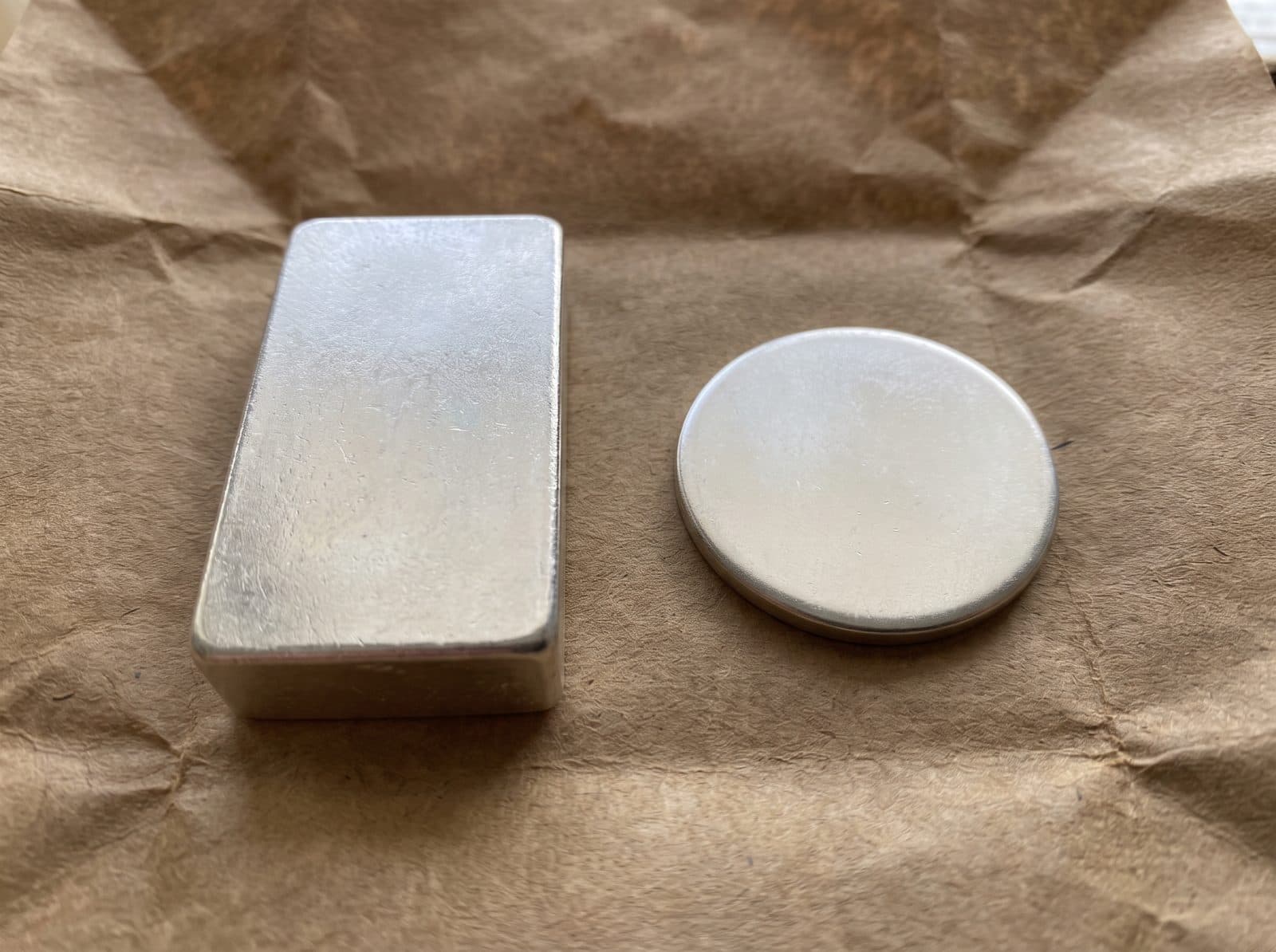
Bullion is priced as metal. A numismatic, or collector, piece is priced for condition and scarcity. Those can share a design. They are not the same market.
This is a description of how the two are priced. It is not which to buy, not a grading lesson, and not a list of coins that will “go up.”
Figure. Two columns: melt-plus-fabrication (bullion) versus condition-and-scarcity (collector). Same outline of a coin is fine. No grade labels we did not source. Not a live quote. Not which to buy.
Bullion is priced as metal
A bullion coin is struck by a national mint and is legal tender at a face value that is far below the metal. The face value is a legal status, not the market price. You will never spend an American Silver Eagle as a dollar in a store and come out ahead. The metal is the point.
Typical modern bullion coins contain one troy ounce of fine silver at a stated fineness of .999 or .9999.
The American Silver Eagle is defined in U.S. law (31 U.S.C. § 5112(e)). It is 40.6 millimeters across, weighs 31.103 grams, contains .999 fine silver, and has a one-dollar face value and a reeded edge. The United States Mint guarantees the weight and purity.
The Canadian Silver Maple Leaf is struck by the Royal Canadian Mint. Current bullion issues are 99.99% pure silver, one troy ounce (the Mint lists 31.11 grams), 38 mm in diameter, with a $5 Canadian face value.
Other sovereign 1 oz coins exist. They share the same idea: a government mint, a stated ounce, a tiny face value, and a premium above melt that usually sits above generic rounds.
Coins are easy to recognize. Dealers and other buyers have seen millions of them. That recognizability is why they often cost more to buy and can be easier to sell in small lots.
Melt value is arithmetic. One troy ounce of .999 fine silver has a melt value equal to the spot quote for one ounce. The product price is melt plus premium. Think of melt as the wholesale metal. Think of premium as the cost of the form. See Silver premiums, explained.
Collector pieces are a different market
Proof and collector versions of the same design are a different market. Those are priced for condition and scarcity, not as bulk metal.
A dealer who bids common bullion all day may not be the buyer for a graded collector coin. The extra on a collector piece is not the same extra as a bullion premium. One pays for minting, brand, and a supply chain that moves ounces. The other pays for a small surviving population in a stated condition.
This page does not invent a grade scale, a population report, or a “typical” collector premium. Do not print a made-up MS or PF figure here.
If you cannot tell whether a listing is selling metal or selling a grade, slow down. Read the identity line, the mint, the year, and whether the price still makes sense as melt-plus-fabrication. If it only makes sense as a scarce object, you are in the collector market. That is allowed. It is a different invoice.
Rounds and “junk” are not the collector market
A round is a privately minted disc of silver. It may show a design, a weight, and a fineness stamp. It is not legal tender. It is not a government coin. Rounds are a melt product with a picture on them, not a coin.
“Junk” is shop slang, not an insult. It means circulated U.S. dimes, quarters, and half dollars whose extra value is the silver, not a collector grade. These coins were not struck as 1 oz bullion. Dealers often trade 90% in bags measured by face value and estimate fine ounces from that face value, adjusting for wear. Circulated coins are slightly lighter than mint-spec coins, so the melt is an estimate, not a lab assay of each piece.
A well-known private mint with a clear hallmark is easier to resell than an unmarked disc. An unknown round may still be good silver. The next buyer may still want a test or a discount. See Stacking basics: coins, rounds, bars.
The tax-code word “collectible” is a different question
Internal Revenue Code section 408(m) treats an IRA’s purchase of a “collectible” as a distribution equal to the cost of that collectible. Metals and coins are on the collectibles list. Section 408(m)(3) then carves out named coins (including the American Silver Eagle) and bullion that meets a fineness test, if the bullion is in the physical possession of a qualifying trustee.
That is an IRA eligibility rule. It is not a grading opinion, and it is not a claim that an Eagle is “not a collectible” in the coin-shop sense.
Eligibility is what the account may buy. Custody is whether the account still holds it. A self-directed IRA that bought American Eagle coins and put them in a home safe was treated as a taxable distribution in McNulty v. Commissioner, 157 T.C. No. 10 (2021), even though American Eagles are on the statutory coin list.
Whether a product fits the IRA exception is a tax question for your own tax professional. Whether a proof is priced as metal or as a scarce object is a market question. Do not mix them. See Silver IRA vs buying from a dealer.
Melt versus the extra, without a verdict
Separate three questions.
First: what is the melt? That is ounces of fine silver times the spot reference.
Second: what is the bullion premium? That is the extra for form, brand, and the supply chain.
Third: is there a collector extra on top of that — condition, scarcity, a grade, a tiny mintage — that a bullion bid will not pay?
If you can see those layers, you are no longer confusing a melt product with a collector object. You can still decide recognizability is worth it. You can still decide a scarce proof is a hobby, not an ounce count. This page does not tell you which to buy.
When you sell, the relevant number is still the bid for that product. A bullion bid and a collector bid are different buyers. See Selling physical silver.
This article is educational only. It is not a recommendation to buy or sell silver, and it is not tax or investment advice.
FAQ
What is bullion?
Metal priced as metal. A bullion coin is struck by a national mint, legal tender at a face value far below the metal. The metal is the point.
What is numismatic here?
Collector versions priced for condition and scarcity, not as bulk metal. Proofs of the same design are a different market.
Are rounds coins?
No. A round is a privately minted disc. It is a melt product with a picture on it, not legal tender.
Does “collectible” in the tax code mean a graded coin?
No. IRC § 408(m) is an IRA rule about metals and coins, with an exception for named coins and qualifying bullion in trustee possession. It is not a grading opinion.
Which should I buy?
This page does not answer that. It separates melt, bullion premium, and collector extra.