Guide 13 · All guides
Bid vs ask when you sell physical silver
When you sell, the number that matters is the dealer’s bid for that product, that quantity, that day — not the chart.
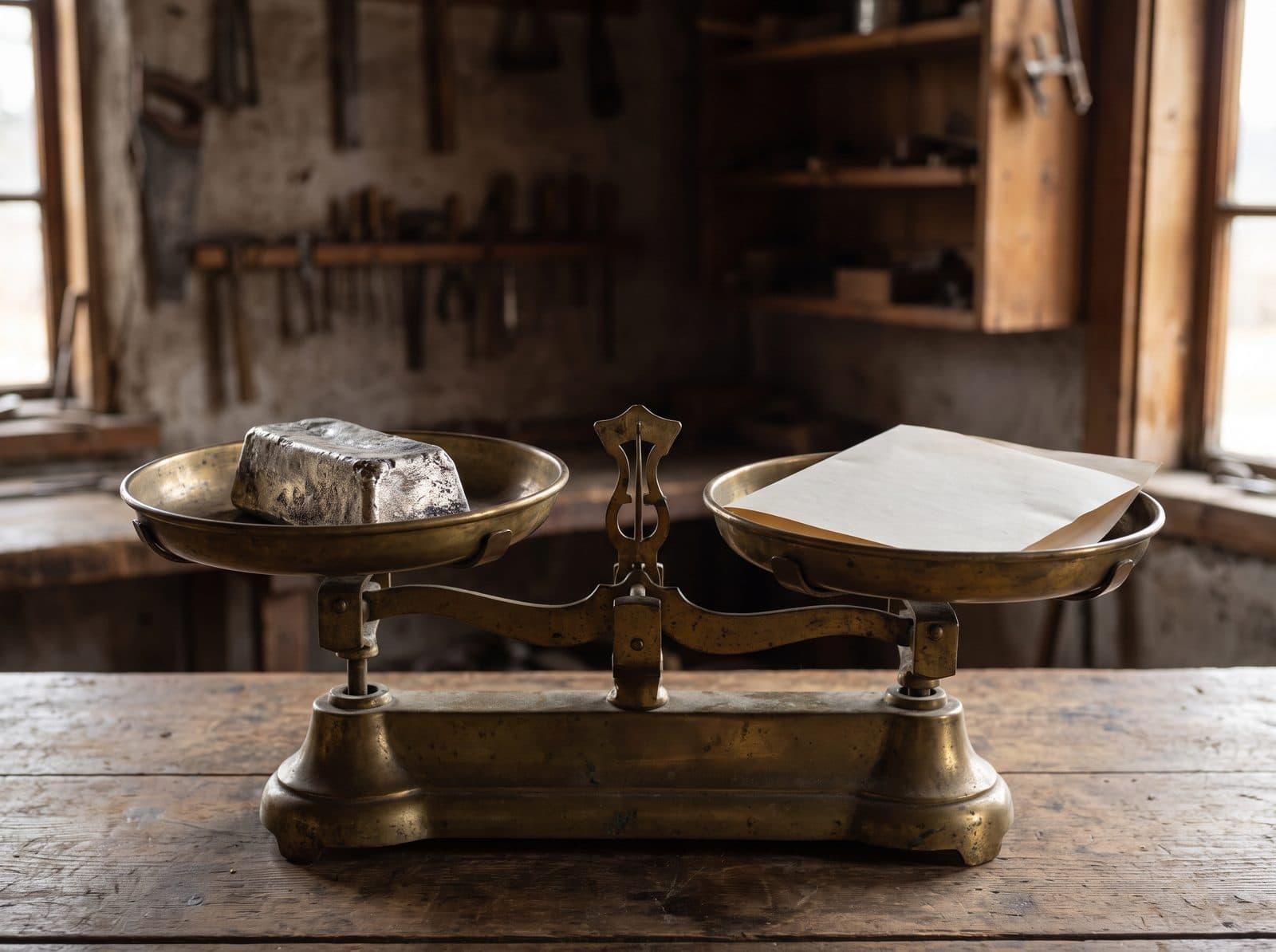
When you sell, the number that matters is the dealer’s bid for that product, that quantity, that day. The chart is not the bid. Last night’s London fix is not the bid.
Two prices, not one
A bid is what a buyer is willing to pay. An ask (or offer) is what a seller is willing to accept. The gap is the spread.
A dealer posts both. Their ask is what they charge you to buy that product. Their bid is what they will pay if you sell that same product back. Those two retail prices straddle whatever wholesale reference they are using as “spot.”
You should expect to pay more than that reference when you buy, and to receive less than it (or only a small premium back) when you sell common bullion. That is how a shop that holds inventory stays open.
This is a description of the two prices. It is not a quote, not a typical spread, and not a recommendation to sell.
A labeled example (not a quote)
Same teaching dollars as the invoice stack. Distances are labeled. They are not a measured market.
Example only
- Dealer ask (you buy): $24
- Reference they call spot: $22
- Dealer bid (you sell that same piece back): $20
The $4 between $24 and $20 is the spread on this pair. It is not “what silver usually does.” It is not last week’s print. It is not a live ticker.
A different shop, a different coin, a different quantity, or a different hour can reprint every line. Compare bids for the same product. Do not shop a story about spreads.
Figure. Three labeled ticks: ask $24 above a $22 reference, bid $20 below it. Distances are teaching marks, not a measured spread. Not a live quote. Not advice.
Why the gap exists
Someone has to bid the piece, authenticate it, hold it, and sell it again. The ask pays for minting, shipping, and a shop that will still be there. The bid is what that shop will pay today for inventory it already knows how to move.
Sovereign 1 oz coins are easy to recognize, so they often keep more of their premium on the way out. Generic bars are often bid closer to melt. Large bars are efficient to store and clumsy to sell in grocery-sized slices. You cannot break a 100 oz bar into grocery-sized pieces without a refiner. Those are liquidity observations, not a ranking of what you should own.
What to compare
Same coin or bar. Same mint or refiner. Same quantity. Same payment method. Then the difference between two shops is mostly their bid, not the chart.
A shop that will not state a bid in writing is telling you something about this transaction, not about silver.
If the metal sits in an IRA, selling is a custodian transaction, not a walk-in. See Silver IRA vs buying from a dealer.
What this page does not do
It does not invent a current bid, a typical percent, or a “good” dollar spread. Live bids move.
It does not tell you to sell. It does not name a dealer.
Spot as a yardstick: What spot price means. Ticket lines: How to read a dealer invoice. Premiums on the way in: Silver premiums, explained. The longer sell walk: Selling physical silver.
FAQ
What number matters when I sell?
The dealer’s bid for that product, that quantity, that day — not the chart, not last night’s London fix.
What is a bid vs an ask?
A bid is what a buyer will pay. An ask is what a seller will accept. A dealer’s ask is the buy price. Their bid is the sell-back price.
Will I get spot?
You should expect to receive less than the reference, or only a small premium back, on common bullion. That is not a live quote.
Is $24 / $20 a real market?
No. It is a labeled teaching pair, the same family as $4 on $20 vs $4 on $40. Do not treat it as a current print.
Can I sell IRA silver at a walk-in counter?
Selling IRA silver is a custodian transaction. Taking the coins is a distribution, not a pickup.